Bedding Guide
What to Look for in a Naturepedic Flax Bedding Set
A bedding set is more than a coordinated arrangement of sheets and covers. Its fibers, construction, fit, and care instructions shape how it feels night after night—and how well it holds up over time. When considering Naturepedic organic flax bedding, a few careful checks can help you build a sleep surface that suits your mattress, your routines, and your preferences.
Linen begins in a field, not a mill. Flax stalks are harvested and processed into fibers, which are then spun into yarn and woven into fabric. That journey helps explain why two bedding sets described as “linen” can differ in feel, weight, finish, and care. For shoppers, the useful questions are practical: Where does the fiber come from? What does a certification cover? Which pieces are included? Will the fitted sheet fit the mattress? And can the fabric be maintained without adding friction to everyday life?
Naturepedic’s organic flax sheets and duvet covers offer a useful example for exploring those questions. The product details provided for the collection describe GOTS-certified organic linen made from flax grown in France, with some fabric woven in a GOTS-certified facility in India. Specifications vary by item, so treat the individual product description—not the collection name—as the final reference. A thoughtful comparison starts with the label and ends with how the set will work in your own bedroom.
Begin with the fiber story
Flax linen is made from the stem fibers of the flax plant. Once prepared and spun, those fibers form yarn that is woven into cloth. Linen is often chosen for its distinctive texture, durability, and ability to allow air to move through the fabric. In bedding, many people also value the way linen can feel substantial without seeming dense, and how its surface develops a softer, more relaxed hand with use and washing.
Those qualities are not a promise that every sleeper will experience the same comfort. The feel depends on the yarn, weave, finishing, fabric weight, and personal preference. Someone who loves a smooth, sleek surface may prefer cotton sateen, while another person may enjoy linen’s visible texture and easy, unpressed appearance. If possible, consider whether you prefer a crisp first impression or a softer, garment-washed feel.
Origin details help make the supply chain more legible, but they should be read precisely. A description may identify where flax was grown and where the fabric was woven; those are separate stages. Naturepedic’s listed organic linen specifications identify French-grown flax, while the listed sheet and duvet cover descriptions name production in India at a certified facility. Do not assume that every item in a broader category shares identical origins or construction. Confirm the details for the exact set and size you are considering.
For a related example of the broader organic flax bedding category, the Organic Relaxed Linen Sheet Set is described as made from flax grown in France and woven into linen in Portugal. It is a separate product and should not be confused with Naturepedic bedding; the comparison simply illustrates why origin statements are worth checking item by item.
Understand what certification tells you
“Organic” is a meaningful starting point, but a certification gives the claim a defined framework. Naturepedic’s listed linen bedding is described as GOTS certified. The Global Organic Textile Standard (GOTS) covers certified textile products through requirements related to organic fiber content and processing, alongside environmental and social criteria across the supply chain. The exact scope depends on the certification and the product, so look for specific, verifiable language rather than relying on a broad sustainability impression.
Certification is not a guarantee that a product has no environmental impact, nor does it establish that a particular sheet will suit every person’s skin or sleep preferences. It is one tool for assessing sourcing and processing claims. When comparing options, check whether the claim applies to the finished textile or only to a particular material, and whether the product listing names the standard directly. If a certification matters to your decision, the maker’s current product information is the place to verify it.
Also distinguish certification from descriptive terms such as “natural,” “responsibly made,” or “eco-friendly.” Those phrases can point toward a product’s intended qualities, but by themselves they do not identify a third-party standard. A clear product page should provide enough detail to understand the material, relevant certification, and basic production information without requiring you to infer what a claim means.
When sustainability is part of your decision, widen the lens beyond the fiber. Consider how long you expect to use the bedding, whether it can be laundered at home, whether replacement pieces are available, and how well its color and construction suit your household. The most useful purchase is often one that you can care for correctly and keep in regular rotation for years.
Read the set contents before comparing prices
“Sheet set” is not a universal recipe. One set may include a flat sheet, fitted sheet, and two pillowcases; another may vary the pillowcase count by size or omit the flat sheet altogether. A duvet cover is usually a separate item unless the listing explicitly says otherwise. Before comparing prices, make a simple inventory of what you need and what the package contains.
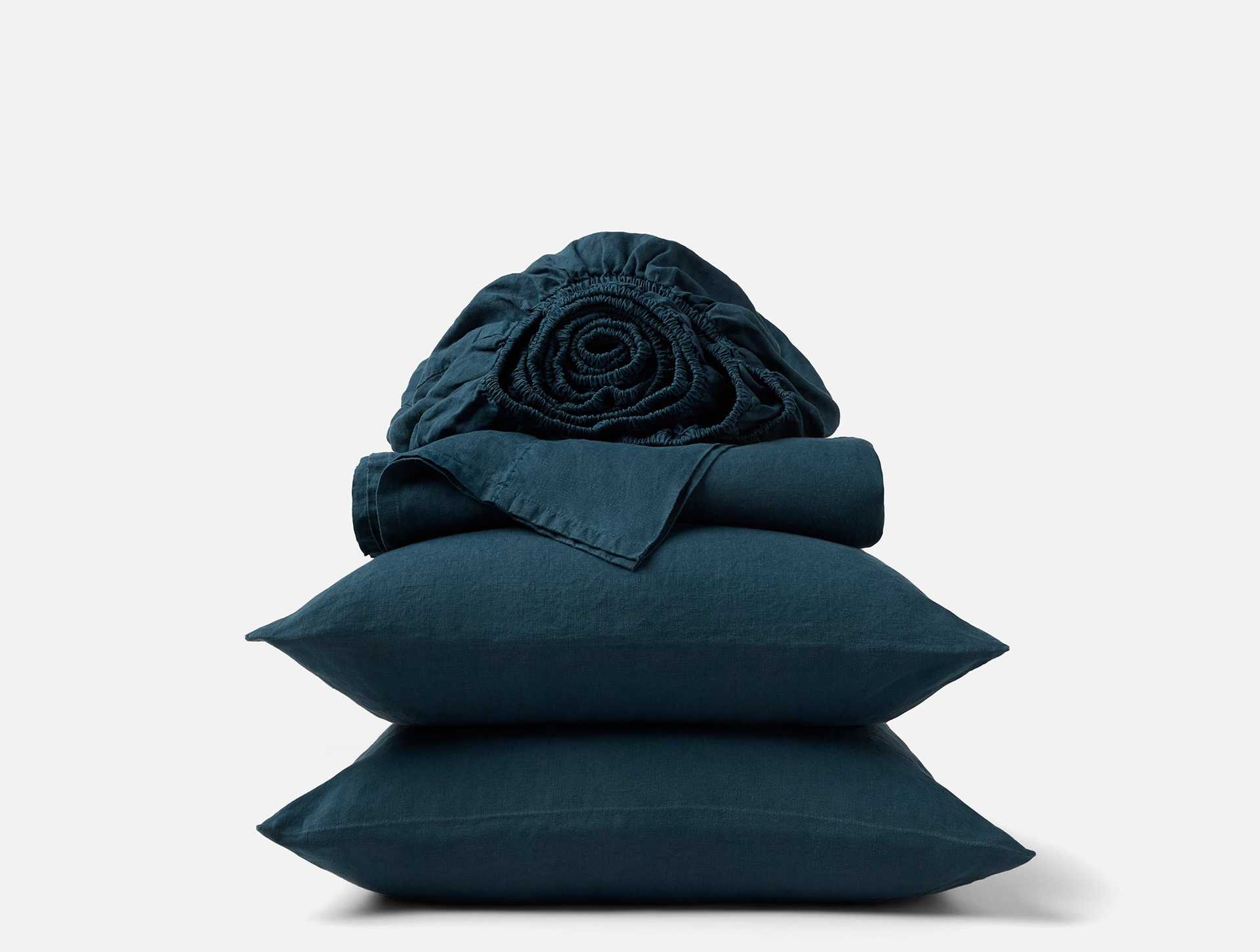
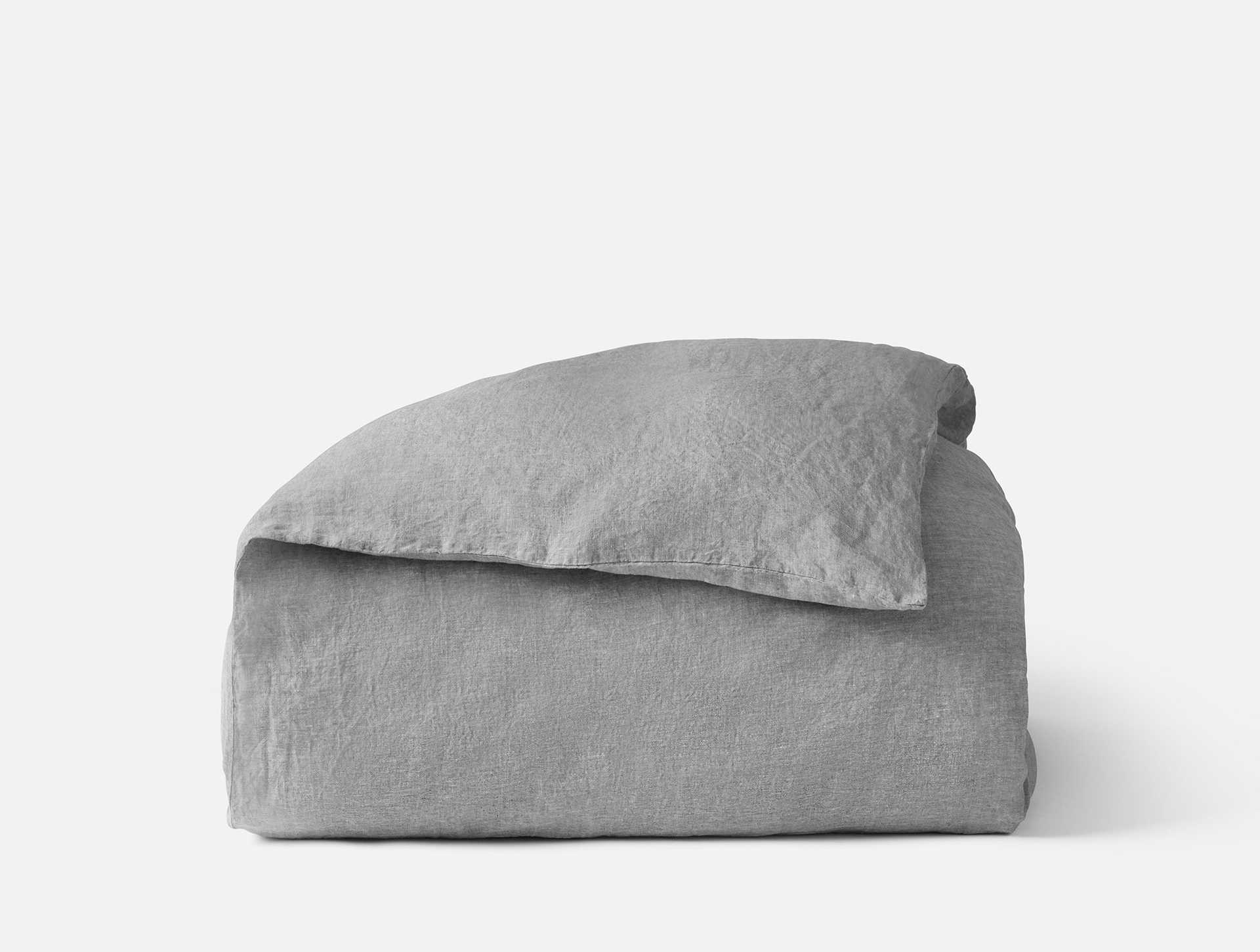
The Naturepedic organic linen sheet set description lists a flat sheet, a fitted sheet, and two pillowcases. It also identifies Queen, King, and California King sizes, with a 15-inch pocket on the fitted sheet. By contrast, a duvet cover set is a different bedding component: the listed Naturepedic duvet cover set includes a duvet cover and two pillow shams, with corner ties to hold the insert in place. Read the exact listing carefully, especially if you are assembling a coordinated bed in stages.
- Sheet set: confirm whether it includes a flat sheet, fitted sheet, and pillowcases.
- Duvet cover: check whether shams are included, and whether the duvet insert is sold separately.
- Size: verify the dimensions of each component, not just the mattress size shown in the product name.
- Separate pieces: if buying pillowcases or a fitted sheet on its own, confirm the quantity and dimensions.
Small differences can matter. Pillowcases that are too short for a pillow may pull at the seams; a duvet cover that is too large can allow the insert to shift; and a fitted sheet that is too shallow may creep off a mattress. Thinking in terms of a complete sleep system—rather than a single product name—helps prevent costly duplication and mismatched components.
Measure the mattress and check fitted-sheet depth
A fitted sheet’s pocket depth is the dimension that determines how much mattress it can cover. The stated 15-inch pocket on the Naturepedic sheet set is a helpful point of comparison, but it is not a substitute for measuring your own bed. Mattress thickness can vary, and toppers, pads, or protectors add height. Measure from the bottom edge to the top surface, including every layer you normally keep on the bed.
Then compare that measurement with the fitted sheet’s pocket depth and check the product’s fit guidance. A sheet that barely accommodates the mattress may feel taut or pull free at the corners; one with generous depth may still work well, but the elastic design and overall cut also affect the fit. The available Naturepedic information identifies a 15-inch pocket, but shoppers should confirm the current specification for the selected size and product page.
Look for details about elastic as well. A fully elasticized edge can help the sheet stay in place around the mattress, while construction and corner shaping influence how easily it can be made. If you have an unusually thick mattress or a low-profile bed, prioritize a product description that clearly explains fit rather than relying on general claims about a “deep pocket.”
Dimensions matter on flat sheets and pillowcases, too. The listed Naturepedic sheets include different pillowcase dimensions by size, and the duvet cover measurements differ between Full/Queen and King/California King. Those details are especially useful when replacing one piece or coordinating bedding you already own.
Compare weave, weight, and finish
Fabric weight can help you picture the character of a linen, but it does not tell the whole story. The Naturepedic sheet specifications identify a fabric weight of 185 grams per square metre (gsm). This measurement describes fabric mass per unit area; it is not a direct rating of softness, strength, or warmth. Weave structure, yarn quality, washing, and finishing all contribute to the way a sheet feels.
Stone-washing or garment-washing can give linen a more relaxed hand before it reaches the bed. A naturally textured surface may show creases more readily than a smooth sateen, but linen’s casual drape is often part of its appeal. If you prefer a crisp, perfectly smooth bed, consider how much ironing you are willing to do—or whether a lived-in finish feels more natural for your space.
Descriptions may use terms such as breathable, moisture-wicking, or temperature regulating. Linen’s structure can support airflow and moisture movement, but bedding cannot control room temperature or replace suitable sleepwear and ventilation. Treat these terms as descriptions of material tendencies, not promises of a specific sleep outcome. Your room, mattress, duvet insert, and individual comfort all play a role.
Color is another practical part of the decision. Naturepedic’s listed color options include Arctic Snow, Beige, Harbor Island, and Forest Canopy. Natural or muted shades can make it easier to coordinate sheets with a duvet cover, but check whether the same color name appears across separate items and seasons. A color name alone cannot guarantee an exact match between different fabric runs or product lines.
Make care instructions part of the buying decision
Good care protects both the fiber and the time you have invested in the bedding. The listed Naturepedic organic linen sheets and duvet covers call for machine washing in warm water, tumble drying on low, warm ironing if desired, and no bleach. Other organic relaxed linen products on the site specify cold water and a gentle cycle. These differences are a reminder to follow the label attached to the exact product, not a general rule picked up from another linen set.
For routine laundering, avoid overcrowding the washer so water can circulate and fabric is not compressed into a tight bundle. Use the recommended amount of detergent, select the care-label temperature, and avoid bleach unless the instructions explicitly allow it. High heat and over-drying can put unnecessary stress on fibers. If you prefer a softer, more rumpled finish, you may not need to iron; if a smoother surface matters, follow the permitted ironing temperature.
Check whether all the pieces can be washed together and whether colors should be separated. A set that is easy to care for is more likely to remain part of your everyday rotation. If you rely on a laundromat, shared laundry facilities, or a particular dryer cycle, factor those constraints in before buying. Care is not an afterthought; it is part of how the bedding performs over time.
Do not use fabric softener or whitening products unless the product instructions permit them. Residue can build up on textiles, and some finishes may be affected by products not intended for the fabric. When uncertain, choose the care instructions from the manufacturer for the item in your hands.
Think about how the set will work as a whole
A coordinated bed does not require every component to be made from the same fabric. Linen sheets can be paired with a linen duvet cover for a consistent texture, or with another material if you prefer a different surface against your skin. The decision is personal: consider the feel you want on the sheet, the look you want on top of the bed, and how often each layer will need washing.
Naturepedic’s listed duvet cover uses corner ties to secure the insert and is described with dimensions for Full/Queen and King/California King sizes. The listed Organic Relaxed Linen Duvet Cover, a separate product, has an eight-inch interior flap, coconut shell buttons, and inside ties. Those construction details illustrate what to examine when choosing any cover: how it closes, whether the insert is held at the corners, and whether the opening is practical to use during laundry day.
For shoppers building a set gradually, write down the color, dimensions, fabric composition, and care instructions of each piece. That simple record helps avoid buying a pillowcase from a different collection that looks similar online but feels or washes differently. It also makes it easier to replace a worn component without rebuilding the entire bed.
A practical checklist before you choose
Before settling on a flax bedding set, pause over the product details and answer a few straightforward questions. The aim is not to find a universally perfect sheet, but to identify a good match for your own sleep habits and household.
- Is the fiber identified as flax linen, and is the stated origin clear?
- Does the listing name a certification, such as GOTS, and explain which product it applies to?
- Are the included pieces and pillowcase quantities clear for the size you need?
- Does the fitted sheet’s pocket depth accommodate your mattress, topper, and protector?
- Do the fabric weight, weave, and finish sound compatible with your preferred feel?
- Are the dimensions suitable for your duvet insert and pillows?
- Can you follow the washing and drying instructions with the equipment you have?
- Do the color and construction details coordinate with bedding you already own?
The value of the details
Flax bedding has a long material story, but the decision at the bed is wonderfully concrete. A fiber label tells you what the textile is made from. Certification helps put sourcing and processing claims into context. A fitted-sheet measurement answers whether the sheet is likely to stay put. A clear list of included pieces shows what remains to be purchased. And a realistic care routine determines whether the set will be easy to live with.
Naturepedic’s organic flax offerings provide a useful case study: the listed sheets specify GOTS-certified organic linen, French-grown flax, a 185 gsm fabric, a 15-inch fitted-sheet pocket, and care instructions that include warm washing and low tumble drying. Its duvet cover set is a distinct purchase, with its own included pieces and dimensions. Verify the current details on the selected product page, since size, finish, and product specifications can vary.
Approach the choice as you would any lasting household textile: with curiosity about its materials and attention to the everyday realities of fit and upkeep. A well-chosen linen set is not defined by a single adjective. It is a considered combination of fiber, weave, construction, and care—one that feels right when the lights go out and remains useful through many turns of the laundry cycle.